What Does “Una Vida Pasada” Mean?
Una vida pasada literally means “a past life.”
In the song, Camilo and Carin León use the idea of having been together in a previous life to explain an unusually deep romantic connection. The speaker feels that their relationship was so natural and intense that perhaps they had already loved each other in another lifetime.
The phrase is therefore both literal and metaphorical in the song: it becomes a way of expressing the feeling that some connections are too powerful to have happened only once.
Camilo and Carin León turn that idea into a beautifully dramatic confession about missing someone, remembering the intimacy of a relationship, and wishing there were a way to undo its ending. Along the way, we get plenty of natural Spanish for talking about memories, longing, relationships, and the things we wish we had done differently.
About the Song
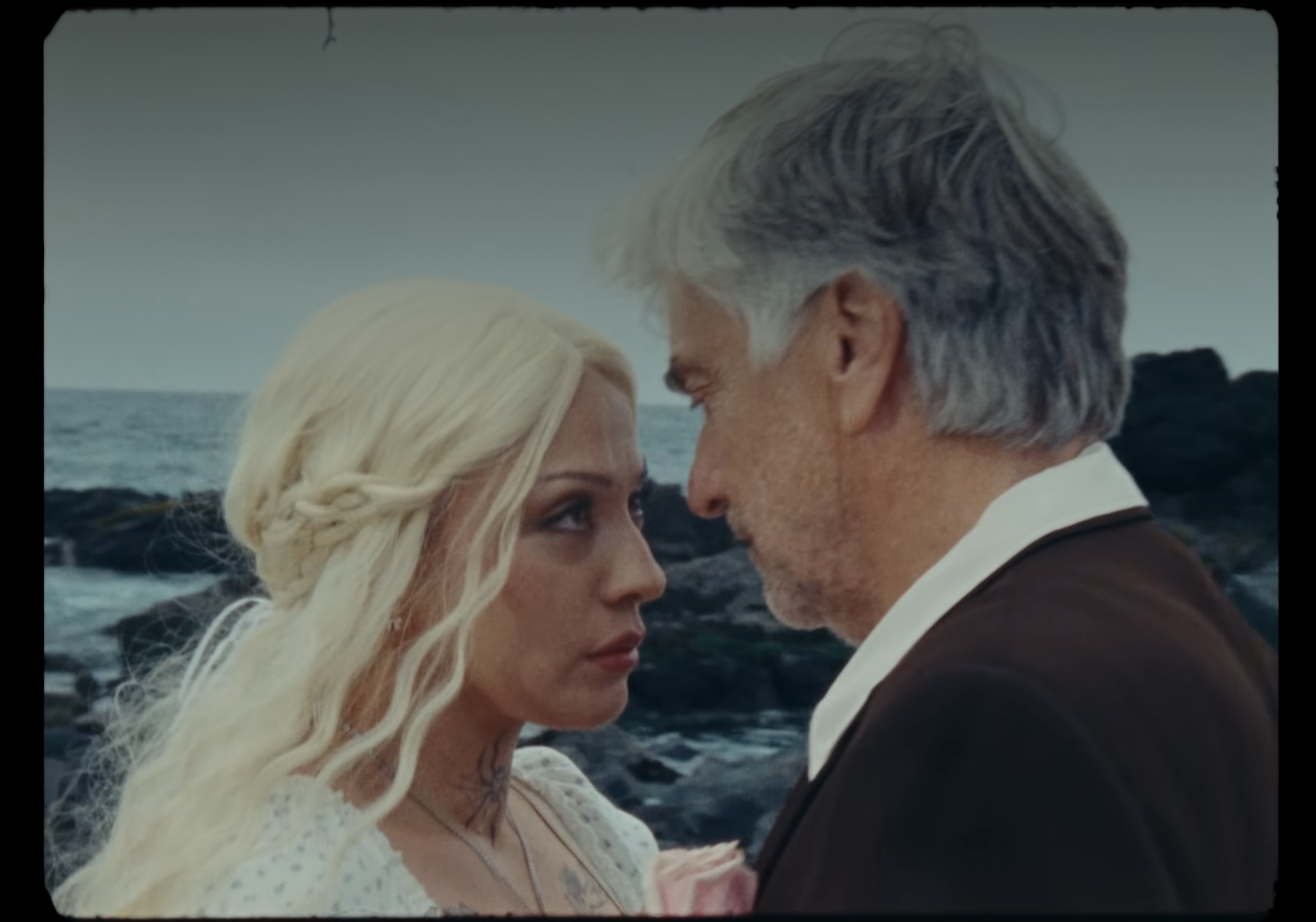
“Una Vida Pasada” brings together Colombian singer-songwriter Camilo and Mexican regional music star Carin León. The song blends their distinctive styles into an emotional portrait of two people who cannot quite accept that their relationship is over.
The central idea is simple but romantic: perhaps they were together in a past life, because their connection felt too natural to have happened only once. The lyrics move between tender memories and increasingly dramatic expressions of heartbreak, making this a particularly useful song for learning how Spanish speakers express longing and emotional intensity.
Reading Comprehension Level
Estimated CEFR Level: B1-B2
The Spanish in “Una Vida Pasada” is accessible for intermediate learners, but the song becomes more challenging through figurative language, emotional expressions, conversational structures, and phrases whose meaning is clearer from context than from a literal translation.
We will focus on:
- Everyday Spanish for relationships and emotions
- Talking about memories and things that happened in the past
- Expressions of longing and regret
- Figurative language and romantic imagery
- Reflexive and pronominal structures
- Useful conversational phrases
- Understanding meaning from context
- How repetition is used to intensify emotion
Listen to the Song
Una Vida Pasada – Camilo & Carin León
Listen to “Una Vida Pasada” on YouTube
Una Vida Pasada – Spanish Lyrics with English Translation
Te veo menos de lo que quisiera
I see you less often than I would like.
Te pienso más de lo que debería
I think about you more than I should.
Dije que ya te olvidé
I said that I had already forgotten you.
Pero ni yo me creo esa mentira
But even I don’t believe that lie.
Me pasan días mirando pal techo
I spend days staring at the ceiling.
Y entre ilusiones tuyas me diluyo
And I dissolve among illusions of you.
Y de todo lo que pude ser yo decidí ser tuyo
And out of everything I could have been, I decided to be yours.
Dime por qué
Tell me why.
Si éramos uno para el otro
If we were made for each other.
Cómo piensas olvidar al amor de tu vida
How do you plan to forget the love of your life?
Pasamos horas hablando sin tener que decir nada
We spent hours talking without having to say anything.
Yo creo que estuvimos juntos en una vida pasada
I think we were together in a past life.
Si nos quedamos dormidos nos teníamos en los sueños
If we fell asleep, we had each other in our dreams.
Y de un futuro los dos ya teníamos hecho el diseño
And we had already designed a future together.
Me quiero cortar las manos aunque me pueda morir
I want to cut off my hands even if it could kill me.
Porque las odio
Because I hate them.
Porque te dejaron ir
Because they let you go.
Porque te dejaron ir
Because they let you go.
Y si me paso por tus pensamientos
And if I cross your mind.
Aunque sea una vez al año
Even if it’s only once a year.
No dudes en abrazarme que te extraño
Don’t hesitate to hug me, because I miss you.
Dime por qué
Tell me why.
Si éramos uno para el otro
If we were made for each other.
Cómo piensas olvidar al amor de tu vida
How do you plan to forget the love of your life?
Pasamos horas hablando sin tener que decir nada
We spent hours talking without having to say anything.
Yo creo que estuvimos juntos en una vida pasada
I think we were together in a past life.
Si nos quedamos dormidos nos teníamos en los sueños
If we fell asleep, we had each other in our dreams.
Y de un futuro los dos ya teníamos hecho el diseño
And we had already designed a future together.
Me quiero cortar las manos aunque me pueda morir
I want to cut off my hands even if it might kill me.
Porque las odio
Because I hate them.
Porque te dejaron ir
Because they let you go.
Manos pa qué las quiero
What do I want hands for?
Si no te puedo tocar
If I can’t touch you.
Échame la mano, linda
Give me a hand, beautiful.
Porque tu recuerdo a mí me va a matar
Because your memory is going to kill me.
Manos pa qué las quiero
What do I want hands for?
Si no te puedo tocar
If I can’t touch you.
De tanto recorrerte mis manos
From having traced every part of you so many times.
Ya tienen memoria muscular
They already have muscle memory.
Manos pa qué las quiero
What do I want hands for?
Si no te puedo tocar
If I can’t touch you.
Si no te toco me pongo loco
If I don’t touch you, I go crazy.
Y una noche de loquera no me va a alcanzar
And one night of madness won’t be enough for me.
Manos pa qué las quiero
What do I want hands for?
Si no te puedo tocar
If I can’t touch you.
Si mis manos tuvieran ojos
If my hands had eyes.
No pararían de llorar
They wouldn’t stop crying.
Ya no me, ya no me sirven las manos
My hands, my hands are no longer useful to me.
Pa qué las quiero? No las quiero más
What do I want them for? I don’t want them anymore.
Learn Spanish Vocabulary Through Una Vida Pasada
| Spanish Word/Phrase | English | Notes |
| olvidar | to forget | A very common verb, especially when talking about relationships and memories. |
| creer | to believe | Used here in “ni yo me creo” to express disbelief. |
| mentira | lie | Also appears in many everyday expressions. |
| diluirse | to dissolve, fade away | Used figuratively here to describe becoming lost in thoughts or illusions. |
| ilusión | illusion, hope, fantasy | Depending on context, it can mean either an illusion or something you hope for. |
| decidir | to decide | A useful everyday verb followed by an infinitive when describing a decision. |
| ser tuyo/a | to be yours | A romantic expression of belonging or commitment. |
| olvidar | to forget | Especially useful with people and memories: olvidar a alguien. |
| pasado | past | Can refer to previous time or something that has already happened. |
| sueño | dream | Can mean either a dream during sleep or, depending on context, an aspiration. |
| futuro | future | Often used when talking about plans or relationships. |
| extrañar | to miss | Extremely common in Latin American Spanish. |
| abrazar | to hug, embrace | A useful everyday verb. |
| recuerdo | memory, remembrance | Refers to something or someone remembered. |
| tocar | to touch | A common verb with many meanings depending on context. |
| recorrer | to go over, trace, travel through | Here, recorrerte means to trace or run one’s hands over someone’s body. |
| memoria muscular | muscle memory | The ability to perform something automatically through repeated physical experience. |
| ponerse loco/a | to go crazy | A common conversational expression describing an intense emotional reaction. |
| loquera | madness, craziness | Colloquial noun related to loco. Here it refers to a state of emotional or impulsive madness. |
Learn Spanish Grammar Through Una Vida Pasada
| Grammar Point | Example | Explanation |
| Comparatives with más/menos + de lo que | Te veo menos de lo que quisiera. | Used to compare the actual situation with what the speaker would like: “I see you less than I would like.” |
| Imperfect subjunctive | Quisiera. | Used here to express a desired or hypothetical situation: “I would like.” |
| Negative pronoun + verb | Ni yo me creo esa mentira. | Ni yo means “not even I.” The structure emphasizes that even the speaker does not believe what he is saying. |
| Pasar + time expression + gerund | Me pasan días mirando pal techo. | Pasar can describe spending a period of time doing something. |
| Decidir + infinitive | Yo decidí ser tuyo. | Decidir followed by an infinitive means “to decide to do something.” |
| Tener que + infinitive | Sin tener que decir nada. | Tener que expresses necessity. Here, the negative form means “without having to say anything.” |
| Imperfect tense | Éramos uno para el otro. | The imperfect describes a past state or situation, rather than a single completed event. |
| Si + imperfect subjunctive | Si mis manos tuvieran ojos… | This structure introduces a hypothetical situation: “If my hands had eyes…” |
| Poder + infinitive | No te puedo tocar. | Poder followed by an infinitive expresses ability or possibility: “I can’t touch you.” |
| Ponerse + adjective | Me pongo loco. | Ponerse can describe a change of emotional or physical state: “I go crazy.” |
Spanish Expressions We Learned from Una Vida Pasada
Ni yo me creo esa mentira – “Even I don’t believe that lie.” A useful expression for admitting that something you have said is obviously unconvincing, even to yourself.
Uno para el otro – “Made for each other.” Literally, “one for the other,” this is a common romantic way to describe two people who seem perfectly suited to each other.
No dudes en… – “Don’t hesitate to…” A very useful expression for encouraging someone to do something.
Échame la mano – “Give me a hand” or “Help me out.” This is a common expression in Latin American Spanish. In the song, however, the phrase becomes a playful double meaning because the singer is talking about his hands and wanting to touch the person he misses.
Ponerse loco/a – “To go crazy.” In this song it describes the intense emotional reaction of not being able to touch the person he misses.
Memoria muscular – “Muscle memory.” The song uses this modern expression romantically, suggesting that his hands remember the physical experience of being with the person even though she is no longer there.
Quick Spanish Quiz
Read the Spanish lyrics above and answer the following questions. Try to answer from the text before looking anything up.
1. What does the speaker admit about his claim that he has forgotten the person?
A) He says everyone believes him.
B) He admits that even he does not believe it.
C) He says he has completely moved on.
D) He says he has forgotten why they broke up.
2. Why does the speaker believe that he and the other person may have been together in a past life?
A) They had known each other since childhood.
B) They had similar families and backgrounds.
C) Their connection felt so deep that he imagines they had already been together before.
D) They both remember living another life.
3. What does “No dudes en abrazarme que te extraño” reveal about the speaker’s feelings?
A) He is angry that the other person left.
B) He wants the other person to avoid him.
C) He still misses the other person and would welcome affection.
D) He is uncertain whether he wants to see the person again.
4. What is the purpose of the phrase “Si mis manos tuvieran ojos”?
A) To describe something that literally happened.
B) To create a hypothetical image that intensifies the speaker’s sadness.
C) To explain how the speaker learned to touch someone.
D) To describe a physical illness.
5. What does “Ya tienen memoria muscular” suggest about the speaker’s hands?
A) They are physically injured.
B) They have become stronger through exercise.
C) They seem to remember touching the person even after the relationship has ended.
D) They cannot move without assistance.
Answers
- B
- C
- C
- B
- C
📚 Keep Learning Spanish Through Reading
If you enjoyed unpacking the vocabulary, grammar, and expressions in Una Vida Pasada, you might enjoy taking the next step with some intermediate Spanish reading.
The stories are designed for intermediate Spanish learners, giving you another way to build vocabulary, strengthen your reading comprehension, and get used to seeing Spanish in context.
Check it out on Amazon → Short Stories in Spanish for Intermediate Learners by Olly Richards
If you decide to buy it through my link, you’re also helping support this little Spanish-learning site. I earn a small commission from qualifying purchases, at no extra cost to you.
Final Thoughts & Want to Learn Spanish Through Music?
“Una Vida Pasada” is a great example of how Spanish-language music can teach us more than individual vocabulary words. The song gives us natural ways to talk about missing someone, remembering a relationship, imagining the past, and expressing emotions that are difficult to put into ordinary words.
I translate Spanish songs line by line, explain vocabulary, unpack grammar naturally, and explore the meaning behind the lyrics – so you don’t just understand the song, you understand the Spanish.
Enter your email here and receive a post whenever I publish a new translation! I promise I don’t spam. 🙂
Questions, suggestions, or song requests? I’d love to hear from you.
¡Hasta pronto!
Affiliate disclosure: This post contains affiliate links. If you make a purchase through one of these links, I may earn a small commission at no additional cost to you.

![Una Vida Pasada [A Past Life] by Camilo & Carin León Lyrics Translation & Meaning | Learn Spanish](https://spanishsongstranslated.com/wp-content/uploads/2026/08/Una-Vida-Pasada-by-Camilo-Carin-Leon.png)
![Te Amo [I Love You] by Piso 21 & Paulo Londra Lyrics Translation | Learn Spanish Through Heartbreak, Regret & Second Chances](https://spanishsongstranslated.com/wp-content/uploads/2026/08/Te-Amo-by-Piso-21-ft.-Paulo-Londra-.png)

![La Mujer Perfecta [The Perfect Woman] by Kurt Lyrics Translation | Learn Spanish Through Romance, Personality & Everyday Expressions](https://spanishsongstranslated.com/wp-content/uploads/2026/08/La-Mujer-Perfecta-by-Kurt.png)
Leave a Reply